WINE
Five Barossa cellar doors worth the drive
The small, family-run estates we send our guests to — and the ones that still pour by hand.
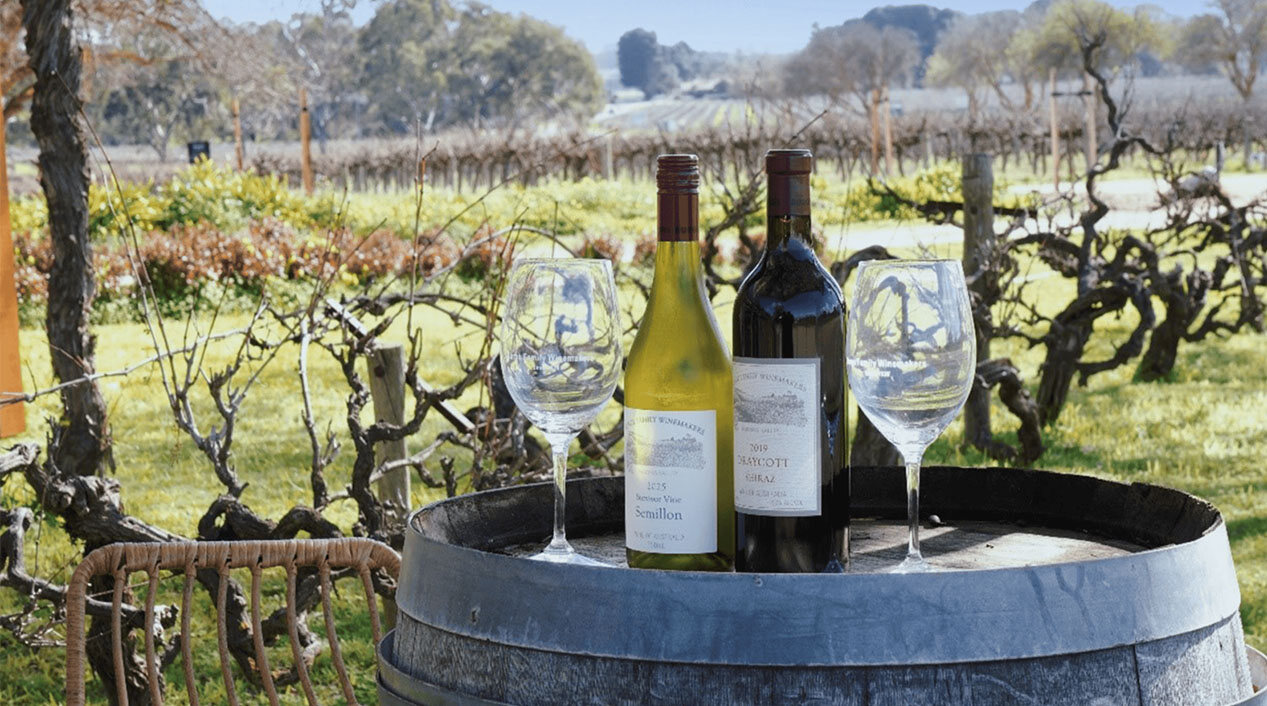
The Barossa is an hour and a bit north-east of Adelaide, and it rewards a slow approach. The valley floor holds the big famous names, but the wines we find ourselves talking about over breakfast tend to come from smaller doors — the ones where the person pouring may well have pruned the vine the fruit came from. Some of the Shiraz here grows on vines planted in the 1840s by Silesian settlers, root systems that survived the phylloxera that levelled much of Europe. That continuity is the real subject of a Barossa tasting.
Below are five cellar doors we point our Lyndoch guests toward. They sit close enough to string into a single unhurried day, but you would do better to choose two or three and linger. Wine country is not a checklist.
Rockford, Tanunda
Rockford is the one we mention first, because it is the most likely to recalibrate what you think a cellar door should be. There is no glass-and-steel tasting room here — just an old bluestone yard, a clutter of basket presses and open fermenters, and someone behind a worn counter pouring from bottles. The Basket Press Shiraz is the wine to ask for, made the way the name suggests, in small volumes that often sell out. It is deliberately low-key, almost stubborn about it, and that is exactly the appeal.
Langmeil, Tanunda
A short drive away, Langmeil is custodian of a block called the Freedom vineyard, with Shiraz vines dating to 1843 — among the oldest surviving Shiraz plantings anywhere in the world. Standing at the edge of that block, looking at gnarled trunks the thickness of a thigh, is worth the visit on its own. The wine made from it is concentrated and slow to unfold; the cellar door staff are generous with the story behind it, and there is a quiet garden by the creek if you want to sit with a glass.
Seppeltsfield
Seppeltsfield announces itself before you arrive, via an avenue of date palms planted along the road during the Depression. The estate’s signature is its fortified wine: a Centenary Tawny collection holding an unbroken line of vintages back to 1878, from which you can taste a wine bottled in your own birth year. It is a rare and slightly uncanny thing — a hundred years of one place in a single glass. The grounds, with their old gravity-fed winery and bluestone buildings, are among the handsomest in the valley.
Henschke, Eden Valley
Climb east out of the Barossa floor into the cooler, higher country of the Eden Valley and you reach Henschke, sixth-generation family growers. This is home to Hill of Grace, a single-vineyard Shiraz from ancient vines that ranks among Australia’s most revered wines. The cellar door is modest relative to the reputation, and visits are best arranged by appointment rather than dropped in on. Go for the wines, certainly, but also for the altitude and the light, which feel a world away from the valley below.
Yalumba, Angaston
Yalumba, founded in 1849, is Australia’s oldest family-owned winery, and it has the unusual distinction of running its own on-site cooperage — one of very few wineries left anywhere that still makes its own barrels. Ask whether you can see it; the smell of toasted oak and the sight of a cooper bending staves over fire is half the reason to come. The range is broad, from everyday bottles to serious old-vine Shiraz, and the grand old buildings reward a wander before you taste.
What ties these five together is not scale or price but attention — the sense, at each, of being handed something a person actually made. Drive between them with the windows down, eat lunch somewhere unhurried, and let the afternoon set the pace. The Barossa keeps well; you do not have to see all of it in a day, and the better instinct is to leave a reason to come back.